




Fire safety in blocks of flats: key risks to address this winter
Fire safety in blocks of flats remains a critical issue for landlords, managing agents and freeholders. As we move through winter into spring 2026, changing seasonal behaviours, increased time spent indoors and the rapid growth of battery-powered devices continue to shape fire risk in residential buildings which is why we continue to look at ways of informing everyone concerned.
Industry guidance and recent fire safety bulletins highlight both persistent causes of fires in blocks of flats and urgent emerging risks, particularly around lithium-ion batteries. Proactively addressing these risks is essential to protecting residents, safeguarding property and maintaining compliance with fire safety legislation.
The most common sources of fires in blocks of flats
UK fire statistics consistently show that most fires in purpose-built blocks of flats originate within individual dwellings. However, failures in managing communal areas, building services and resident behaviour can significantly increase the likelihood of fire spread and serious consequences.
Below are the most common fire risks that responsible persons should actively manage.
1. Cooking and kitchen-related fires
Cooking remains one of the leading causes of fires in residential properties.
Key risks include:
- Unattended cooking
- Overheated oils and fats
- Faulty or poorly maintained kitchen appliances
Even small kitchen fires can escalate quickly if detection systems fail or escape routes are compromised.
2. Electrical faults and overloaded circuits
Electrical faults are a major ignition source in blocks of flats.
Common causes include:
- Ageing or poorly maintained wiring
- Overloaded sockets and extension leads
- Damaged cables, plugs or appliances
Electrical fires often develop out of sight, making early detection and regular inspection essential.
3. Smoking materials
Smoking-related fires remain a concern, particularly where cigarettes are not fully extinguished or are discarded near combustible materials such as soft furnishings, bedding or waste.
4. Portable heaters and heating equipment
Colder months often bring increased use of portable heaters.
Risks arise when:
- Heaters are placed close to furnishings
- Devices are left unattended
- Electrical circuits are overloaded
Clear resident guidance and monitoring of heating equipment can help reduce incidents.
5. Candles, tea lights and open flames
Candles and decorative flames continue to cause preventable fires.
Common risks include:
- Candles or tea lights placed directly on surfaces
- Candles left unattended
- Incense sticks and oil burners
- Flames positioned near curtains, paper or decorations
These items can ignite surrounding materials quickly and should be used with extreme caution — or avoided altogether in higher-risk buildings.
6. Faulty or missing smoke alarms
Working smoke alarms are critical for early warning.
Issues frequently identified include:
- Missing alarms in older buildings
- Poor maintenance
- Flat or missing batteries
Ensuring alarms are installed, tested and maintained is a key fire safety responsibility.
7. Combustible materials in communal areas
Communal areas and escape routes must be kept clear at all times.
Fire risk increases when:
- Bicycles, mobility scooters or prams are stored in corridors or stairwells
- Furniture or flammable items are left in shared spaces
- Waste accumulates outside designated refuse areas
Such items not only fuel fires but can obstruct evacuation and fire-fighter access.
8. Arson and deliberate fires
Deliberate fires remain a significant risk in blocks of flats, particularly in poorly managed or unsecured buildings.
Typical scenarios include:
- Fires started in stairwells or corridors
- Intentional ignition of rubbish bins or bulk waste
- Deliberate fires in entrance lobbies
Good lighting, secure access controls, prompt waste management and, where appropriate, CCTV can all help reduce the risk of arson.
Fires on balconies: a growing risk
Balconies are increasingly identified as ignition points for residential fires, particularly where they are treated as storage or leisure areas.
Common causes include:
- Smoking materials, including discarded cigarette ends
- BBQs used on balconies, contrary to building rules
- Faulty electrical items left outside, such as lighting or heaters
- Storage of combustible materials or fuel, including furniture, gas canisters or waste
Fires starting on balconies can spread rapidly into flats and upwards through a building’s external structure.
Urgent action needed: lithium-ion battery fire risks
Lithium-ion batteries now represent one of the fastest-growing fire risks in residential buildings.
They are commonly found in:
- E-bikes and e-scooters
- Power tools
- Mobile phones, laptops and tablets
- Power banks and portable charging packs
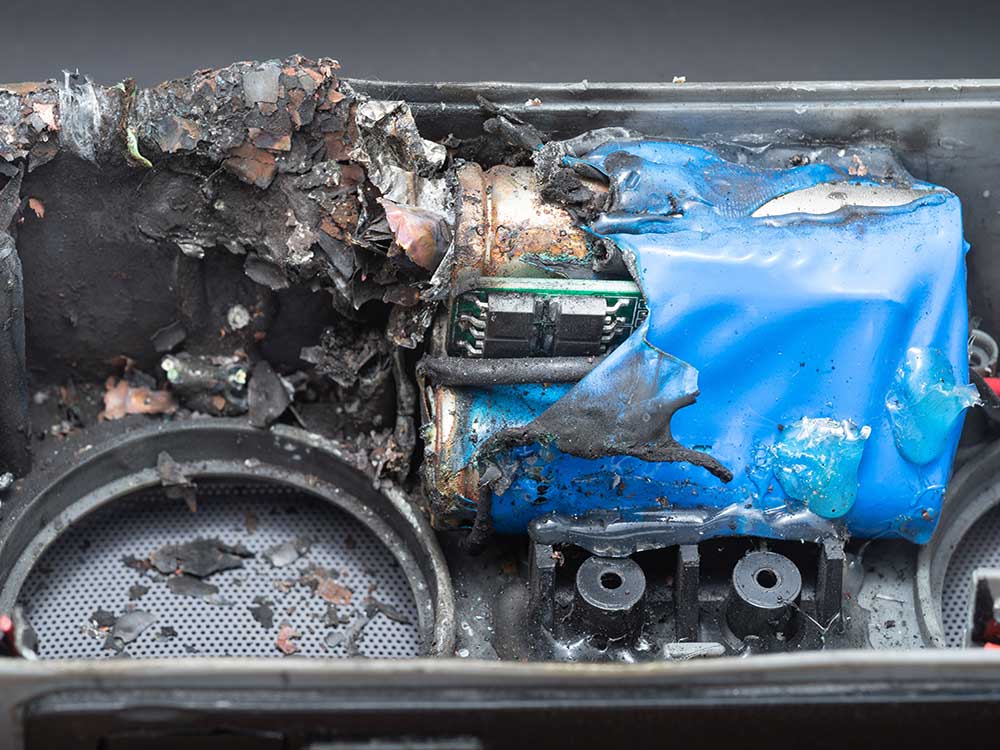
Below is an example of a lithium-ion battery fire in a bluetooth speaker.
Why lithium-ion batteries are dangerous
Lithium-ion batteries store large amounts of energy in a small space. When damaged, overcharged, poorly manufactured or incorrectly stored, they can enter thermal runaway, causing:
- Extremely rapid fire development
- Intense heat
- Toxic smoke
- Re-ignition even after initial extinguishing
High-risk behaviours in blocks of flats
Fire services are increasingly responding to incidents linked to:
- Charging e-bikes, scooters or power banks inside flats
- Charging batteries in escape routes, including corridors and stairwells
- Power banks and battery packs charging near combustible materials
- Overnight or unattended charging
- Use of cheap or non-compliant chargers and batteries
Any battery fire in an escape route can quickly make evacuation impossible.
Managing lithium-ion battery risks
Managing agents and landlords should consider:
- Clear rules prohibiting battery charging or storage in communal areas
- Resident guidance on safe charging practices
- Reviewing fire risk assessments to include battery-related hazards
- Ensuring escape routes remain free of ignition sources and combustibles
- Considering designated, well-ventilated charging or storage solutions where appropriate
Fire safety responsibilities in blocks of flats
Under UK fire safety legislation, responsible persons must take reasonable steps to reduce fire risk and protect residents.
This includes:
- Regularly reviewing fire risk assessments
- Maintaining fire doors, compartmentation and passive fire protection
- Keeping escape routes clear at all times
- Maintaining fire detection and alarm systems
- Providing clear fire safety information to residents
Staying proactive into 2026
Fire safety risks continue to evolve alongside technology and resident behaviour. Addressing both traditional fire hazards and emerging risks such as lithium-ion batteries and balcony fires is essential for safe, compliant residential buildings.
How the Charles Cox Group can help
With extensive experience in residential block management, Charles Cox supports landlords and freeholders in identifying, managing and reducing fire risks — helping to create safer, well-managed homes. Get in touch today and find out how we can work with you to reduce and manage the risks.